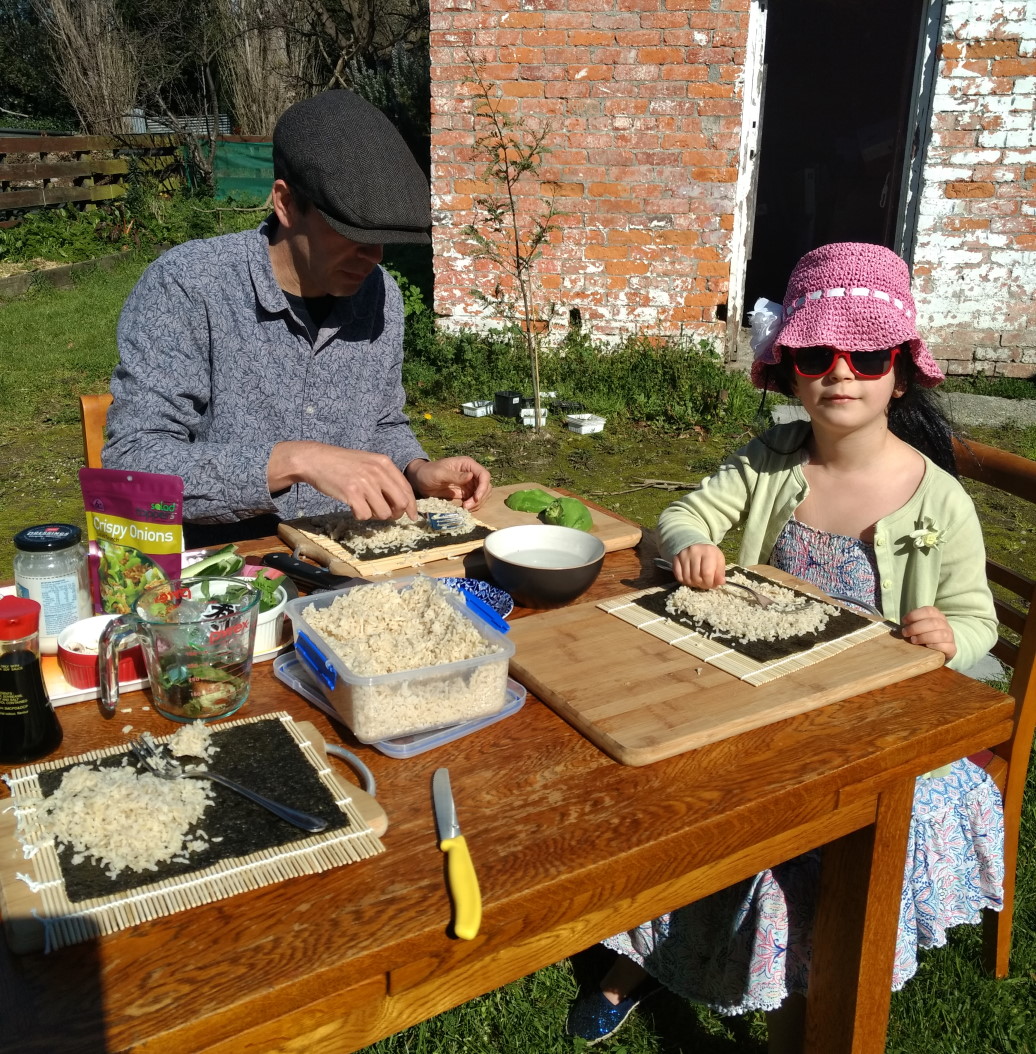
We eat a lot of home-made sushi and it’s time to document the process.
Favourite fillings
Carrot, cucumber, tofu (optional avocado)
Avocado and tofu (optional dried fried shallots)
Double avocado
Tofu and rocket (optional mayo)
1. Rice
2 cups basmati brown rice
3.25 cups of water
90ml rice wine vinegar
45g caster sugar
15g salt
Put the rice and water in the rice cooker and start.
While it’s cooking, prepare the seasoning by stirring the vinegar, sugar, and salt together. Microwave for 40 seconds then stir and/or sit until dissolved.
Stir seasoning into still hot cooked rice and then put into fridge.
This is a great recipe that I have shamelessly stolen from The Vegan Apprentice. The only reason I’m putting it up here is that I’m worried that their website will vanish one day and take the recipe with it.
Sometimes I just make the ginger kisses, but I also use both the biscuits and the filling in my Ginger Kiss Trifle.
Ingredients
185gm margarine
2/3 cup brown sugar
1/4 cup golden syrup
60ml water
40ml oil
1/4 tsp salt
2 cups plain flour
1 tbsp ground ginger (no, seriously, it’s about right)
2 tsp baking soda
1 tsp baking powder
1 tsp cinnamon
Method
Preheat the oven to 180 degrees Celsius.
Beat the margarine until soft. Add the next 5 ingredients and beat on high speed until fluffy.
Sift together the 4 dry ingredients.
The gradually add the dry ingredients to the marg mix and beat on low speed. I sifted the dry ingredients again as I added them.
Refrigerate the dough for at least 20 minutes or else it’s too hard to work with.
Shape into half walnut sized balls and place onto baking tray. If you want to press down with a fork you may need to dip the fork in flour to stop it from sticking.
Bake for ~ 8 minutes. Do not over cook.
When cool sandwich together with mock vanilla cream filling.
Refrigerate for a couple of hours before serving.
Vanilla Cream Filling
Ingredients
65gm margarine
1.5 cups icing sugar
2 tsp vanilla essence
1 tbsp soy milk
Method
Beat the margarine on high speed until soft.
Add the soy milk and vanilla essence and beat until fluffy.
Another step in my quest to make up for the Wairarapa’s failure to provide Malaysian food. This is my attempt to create mee goreng, and particularly, the mee goreng made by KK Malaysian in Wellington.
This is a work in progress. It’s tasty but still isn’t as good as I want it to be so I’ll continue to experiment and will edit as required (recently remembered to add tomato segments!).
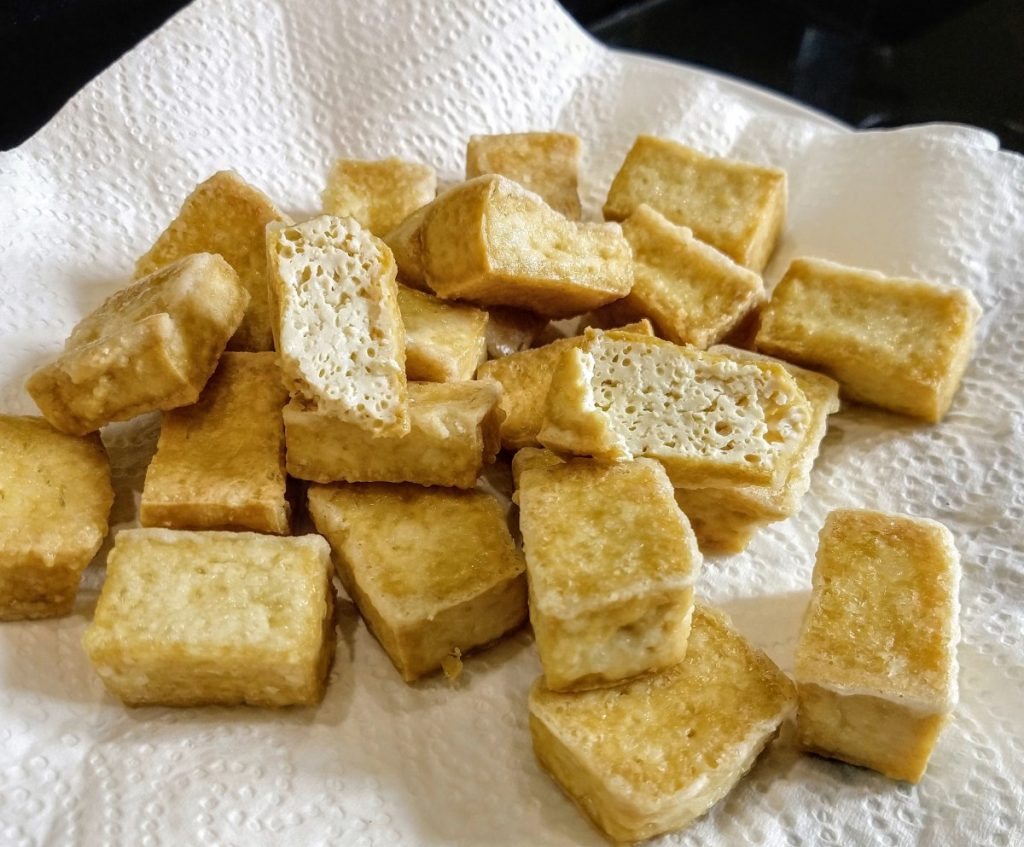
Bonus ingredient: how to make your own tofu puffs!
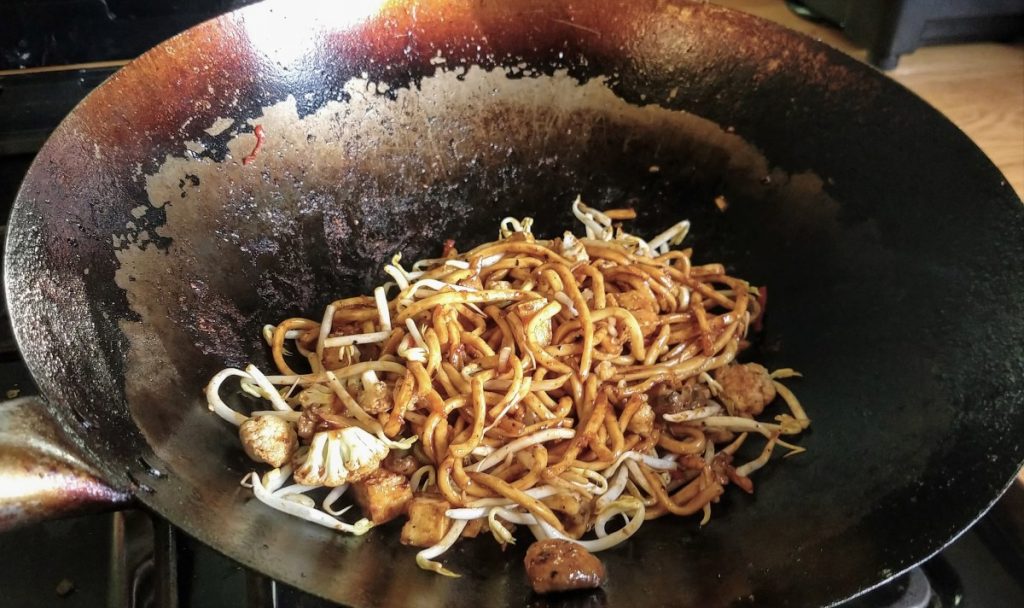
Mee goreng in progress.
Ingredients (3 servings)
Tofu Puffs
2 tbps canola oil
2 tbps cornflour (cornstarch)
300g block of firm tofu (no need to press it)
Mee Goreng
4.5 tbsp canola oil
3 tsp crushed garlic
500g fresh noodles
3 tsp sambal extra pedas (aka hot chilli sauce)
3 tsp kecap manis (sweet soy sauce)
3 tsp vegetarian oyster/fish sauce
1 cup vegetable stock
3 handfuls of vegetables, chopped small to cook quickly (mushrooms, broccoli, asparagus, cauliflower, corn, cabbage, leek, whatever)
1.5 small tomatoes chopped into segments
tofu puffs chopped into halves or quarters
1 packet mung bean sprouts
sesame oil
lime juice
chopped spring onions (garnish)
dried fried shallots (garnish)
Instructions
Tofu puffs
Pre-heat oven to 180c
Chop the tofu into puff size chunks
Mix the canola oil and conflour into a slurry
Toss the tofu lumps in the slurry to coat them
Arrange on a tray and bake for 20 minutes, turning once
Turn out onto paper towels to absorb extra oil
Mee Goreng (cook in 3 batches)
Please assume that you’re using a third of the ingredients for each batch
Prepare/chop all ingredients ready to cook
Mix up portion of the chilli, kecap manis, oyster sauce, soy sauce and tomato paste
Get the wok smoking hot
Add canola oil
Add noodles and stir fry briefly to get a bit of char on them
Add sauce mixture
Add garlic
Add any vegetables that will take a while to cook (e.g. asparagus, mushroom, cauliflower)
Stir-fry for a bit (add a tablespoon or so of stock if it starts to look a bit dry)
As Wairarapa continues to fail me in the provision of Malaysian food, I decided it was time to learn how to cook laksa.
The first experiment went well and the second was good enough that I thought I’d record it to help me iterate from there. I’ll be updating it as I get better at it, and I’m open to suggestions. (I’ve iterated a bit and I’m pretty happy with where this has got to. Updated again with the tom yum paste for a slightly sharper flavour. Taken out the coconut cream.)
It’s not “authentic” but it was delicious.
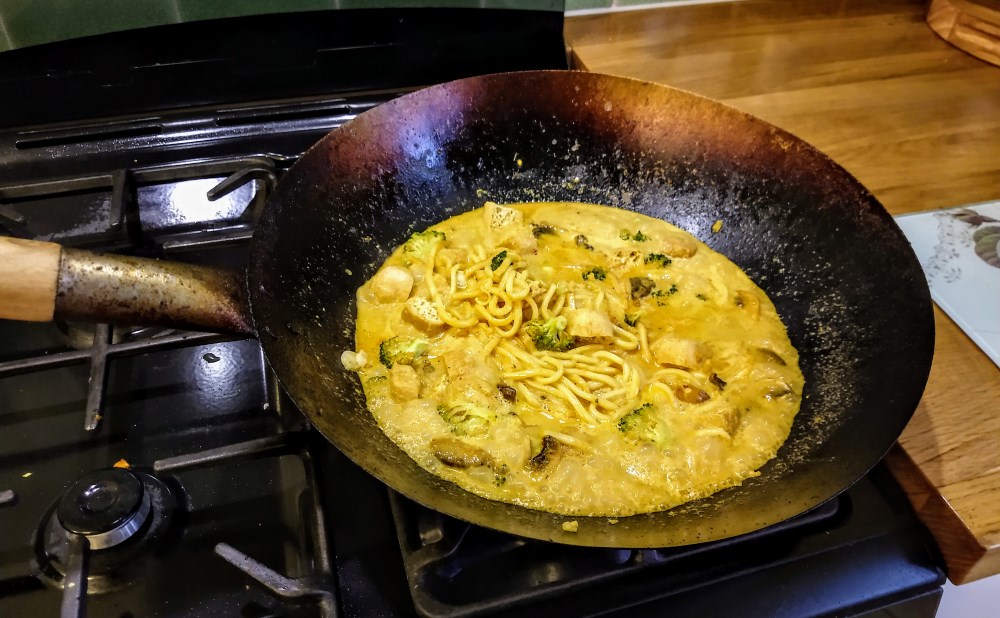
Laksa in the wok
Ingredients (serves 4)
4 tbsp cooking oil (canola)
3 heaped tbsp Exotic Foods Thai red curry paste (green is also ok)
1 heaped tbsp tom yum paste
3 large garlic cloves, chopped
Up to one medium cauliflower cut into small pieces
1 cup broccoli cut into small pieces
1 cup capsicum cut into small strips
1 cup button mushrooms (whole if very small, otherwise cut)
3 tsp Sambal Extra Pedas chili sauce (or any other very hot chili)
Last year’s Christmas trifle was a bit disappointing. The sponge wasn’t quite right, it wasn’t moist enough, and no one really liked it that much. I decided that I wasn’t going to bother again.
But then I had an idea – Ginger Kiss Trifle! I’d already made ginger kisses once and liked them, and I thought they’d make a deliciously flavoursome base for the trifle.
This is less of a recipe and more a set of instructions that relies on other recipes. Therefore you won’t find a complete list of ingredients at the start, and it’s all a bit approximate. Oh, and it’s all vegan of course.
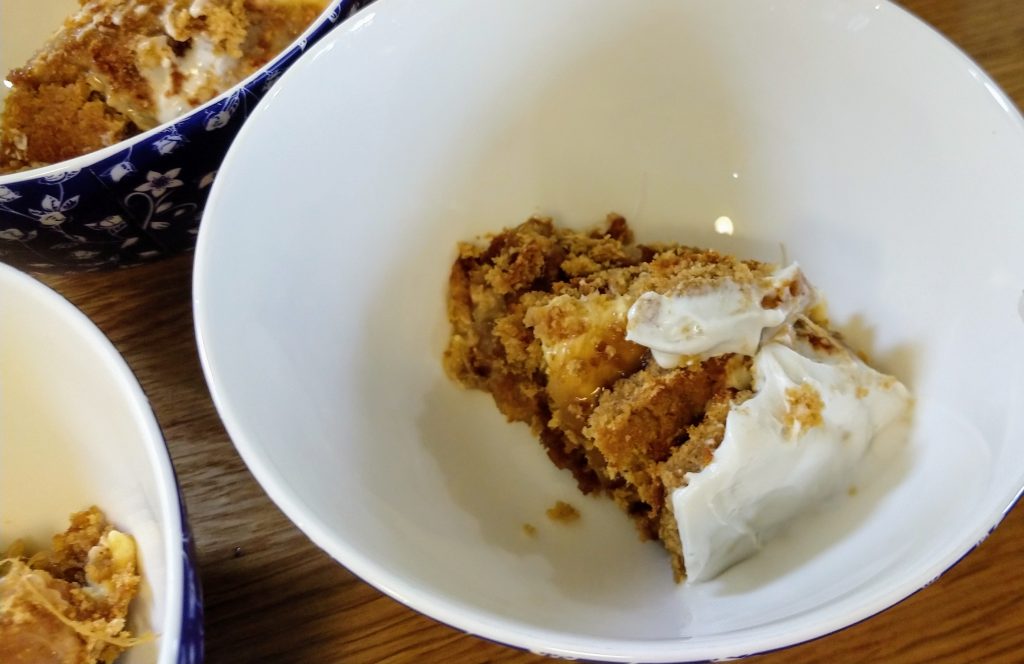
It’s hard to take a good picture of trifle and this doesn’t even come close!
The Day Before
Step 1 – Make a double batch of these ginger kiss biscuits from The Vegan Apprentice. (You’ll make the icing the next day.)
Step 2 – Stew a couple of cups of fruit (rhubarb and apple was nice, but next time I’m going to try pear).
Step 3 – Make sure you have a can of coconut cream cooling in the fridge.
Step 4 – Make this caramel sauce from Jessica in the Kitchen and put it in the fridge to thicken.
On the day
Step 1 – Make the icing from the ginger kiss recipe – make sure it’s not too thick.
Step 2 – Put the first third of the ginger kiss biscuits down. Sprinkle with two tablespoons of brandy.
Step 3 – Spread the first half of the stewed fruit.
Step 4 – Pour/spoon on half of the caramel sauce.
Step 5 – Another layer of ginger biscuits with two more tablespoons of brandy.
Step 6 – Spread/spoon over the icing.
Step 7 – Another layer of stewed fruit.
Step 8 – The second half of the caramel sauce.
Step 9 – Last layer of biscuits.
Step 10 – Top with the whipped coconut cream (add a couple of tablespoons of icing sugar, a teaspoon of vanilla essence, and one or two tablespoons of brandy).
Step 11 – Put in the fridge for a couple of hours.
Step 12 – Just before serving, garnish with chopped crystallised ginger, or chocolate flakes, cherries, or whatever you fancy.
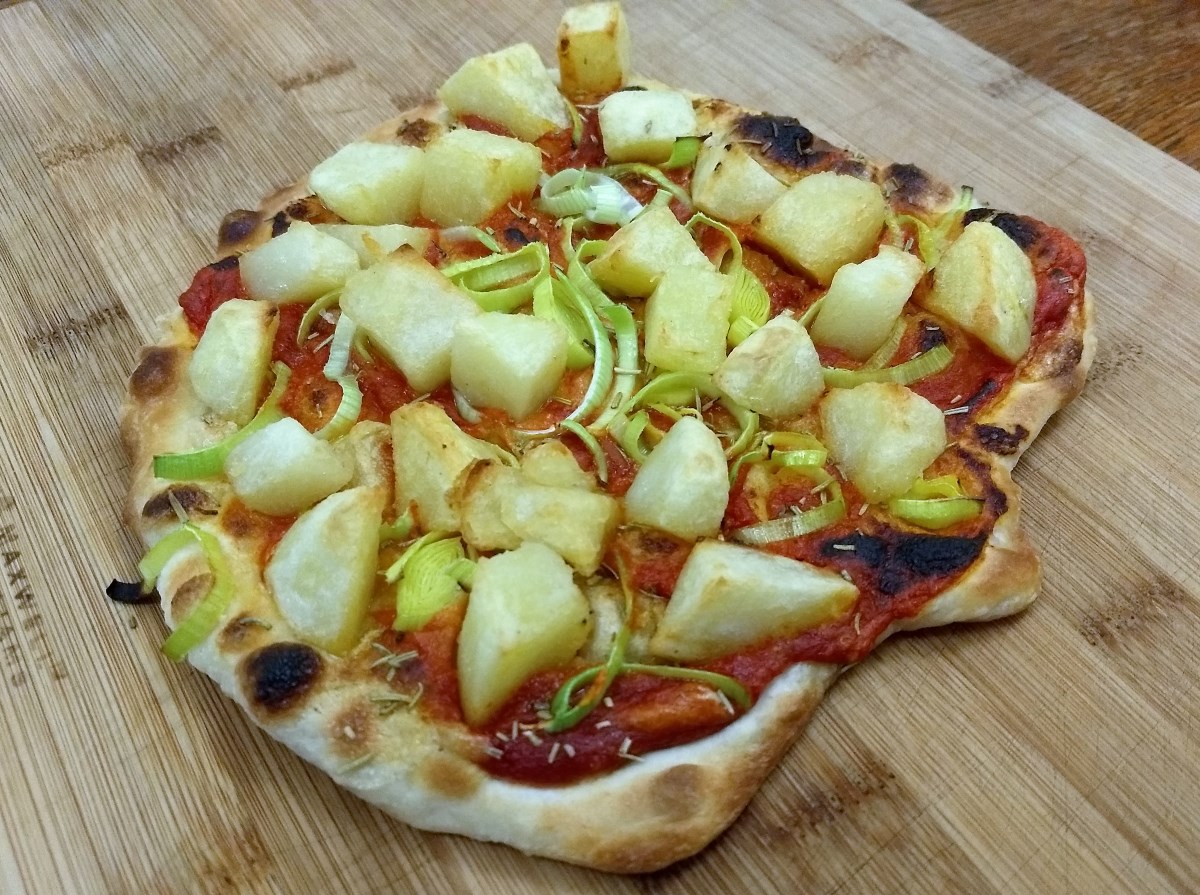
My latest challenge has to been to develop a good vegan pizza – without the use of vegan cheese. Obviously it wasn’t going to be cheesy but I wanted it to have a combination of flavours and textures that satisfied my pizza appetite.
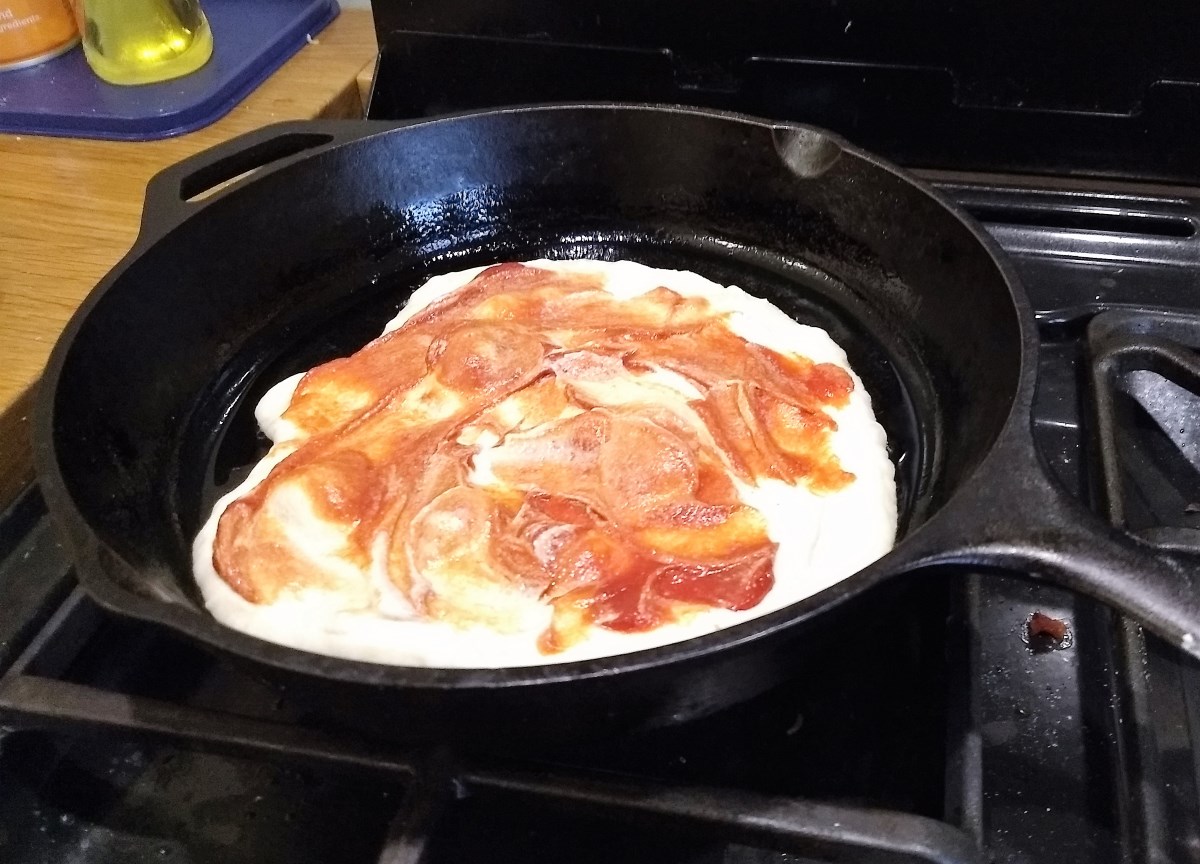
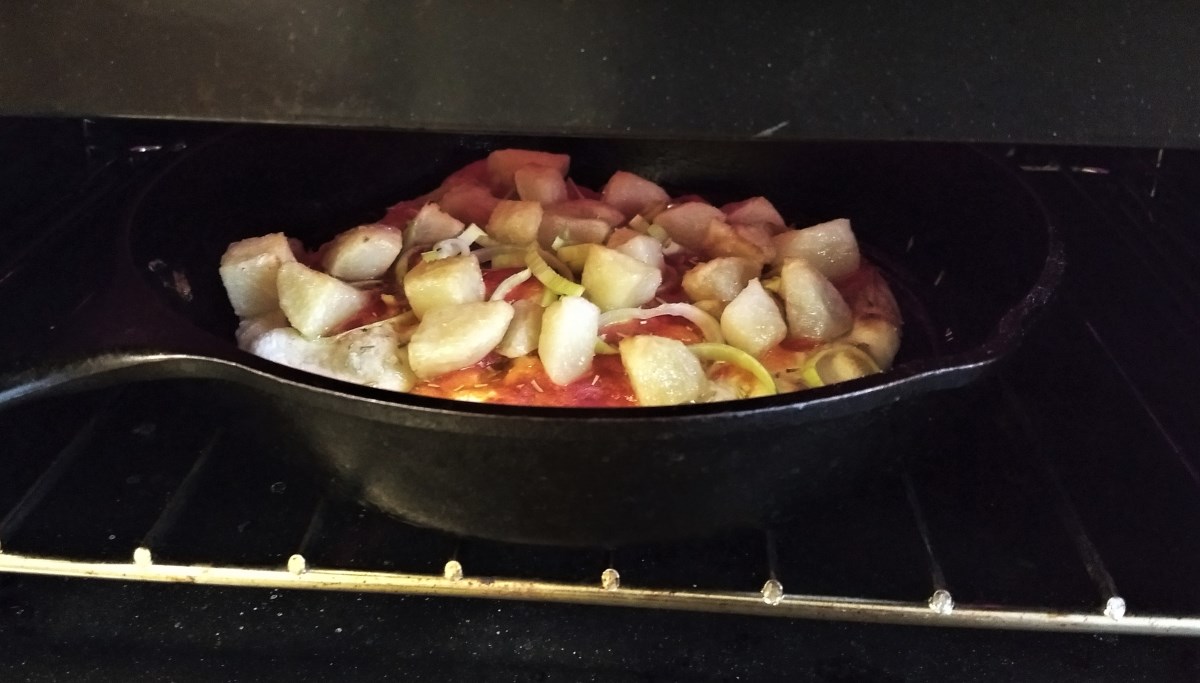
At the same time, I also want to document the cast-iron skillet + grill (US: broiler) technique I use to cook pizza these days.
2 cups diced roasted potatoes (about 3 good sized potatoes)
1 leek – sliced
Method
The general order of things is:
Much earlier – make pizza dough and leave to rise
Earlier – roast potatoes
Make cashew sauce
Prep other ingredients
Make pizza
Eat pizza
Cashew sauce
Combine ingredients and blend.
The texture should be spreadable, add more extra virgin olive oil if required.
Pizza base
Mix yeast into warm water and leave 10 minutes to develop. It should froth up a bit. If it doesnt, either the water is too hot or the yeast is dead, try again.
Sift flour and salt into a large bowl.
Make a well, pour in yeast mixture and olive oil.
Mix to combine.
Turn out onto a floured surface and knead until it’s all the same consistency and springs back when pressed.
Apply a fine coat of olive oil, put back in the bowl and cover. Leave in a warm place until it has risen to at least twice the original size.
Pizza
Get everything ready first.
Take a third of the dough and roll out to the size of your skillet.
Heat the skillet to medium-hot and the grill to medium.
Put 1 tbsp of extra-light olive oil into the skillet.
Put the rolled out dough into the skillet.
Coat with about 2 tablespoons of the cashew cream and 1-2 tablespoons tomato paste (to taste).
Sprinkle leeks, roast potatoes, rosemary and salt.
Drizzle extra virgin olive oil over the top.
Put the skillet under the grill.
Leave under the grill until it looks cooked (some slight blackening is expected).
Return the skillet to the burner and cook until the base is done (it should be nicely browned).